“You’ll have power, oh yes you will. But when the moon whispers to you, she will command you, and when she does, you must obey.“
I’m no stranger to this author’s books, and read Shadows of the Woods and Shadows of Hell back in ’20/’21. So after a few years, it was really great to pick up Season of the Wolf recently, a dark, coming-of-age horror that is just perfect for spooky season! This is probably one of my favourite Q&As I’ve ever done. It’s been so good to get to know more about Niall’s writing process, his influences and what’s coming next. Grab a cuppa and a biscuit, and read on! (You can read my review of Season of the Wolf here!)

1. As someone from Yorkshire, I loved the setting in Season of the Wolf! Our main character, Lucy, moves from New Jersey to Yorkshire to live with her grandfather – do you have any connection to New Jersey? What made you choose this place as Lucy’s home? And have you lived in Yorkshire all your life?
Yes, I’ve lived in Yorkshire all my life. I was born in Leeds, moved to Huddersfield, then York, before my family settled Baildon – a small town on the outskirts of the city of Bradford.
There is no specific or sentimental reason for choosing New Jersey as Lucy’s home – I’ve no connection with the state, nor have I ever been. I knew I wanted Lucy to be brought up in the USA, and my first instinct was to choose New York. However, part of me felt New York was perhaps a tad clichéd – too well known – so I switched to New Jersey. There was no reason for picking New Jersey – perhaps something prompted me at the time – but it felt right, so I ran with it.
2. A chunk of the book brilliantly captures the sense of a ‘something’ in Lucy’s grandfather’s cellar. How did you aim to build up that curiosity about what this ‘thing’ was and ensure the reveal was something fresh and exciting?
I was curious myself to learn what was lurking in the cellar. There is a bric–brac shop near me called Grandpa’s Basement. Driving past one day, the horror-writer in me asked, ‘what is lurking in grandpa’s basement?’ and in that moment, the seed was planted. But it took a few rough story outlines to decide what that ‘something’ would be. A second source of early inspiration came from the closing line of the movie The Lost Boys, where the grandpa reveals he knew about the existence of vampires all along. I thought it would be an interesting story if the grandpa was a seasoned vampire hunter. So, initially, the ‘something’ was going to be a vampire. However, I felt that vampires had died a death by that point. I considered using a creature from one of my earlier books (see Q 8), but I really wanted Season Of The Wolf to stand alone from my other work. I’m not sure at which point I opted for a werewolf, but it unlocked a lot of potential in the story. At that time, there wasn’t much werewolf horror on my radar (although there has been a resurgence in the time it’s taken to complete and publish the novel), and it was not a mythology I had written about before. I like to think that, because it was a fresh and exciting idea to me, this comes across in the writing.
Another element is that I tease early on that the ‘something’ – in this case, a werewolf – will have a connection to Lucy and the other threads running through the story. If written effectively, the reader will want to know how these elements fit together – it’s about keeping the reader on the hook, leaving just enough breadcrumbs to maintain their curiosity, without giving too much away too soon. I want the reader to be asking questions, creating their own theories. Hopefully, they keep reading because they need the answers to their questions and need to see if their theory is correct.
3. Is there anything specific you do to build that sense of dread in a reader? Do you find this an easy or difficult part of writing?
Sometimes the writing can flow quite naturally. Other times, I’ll struggle to write the scene and feel it doesn’t reflect what I want to say or how I envisaged it. It can be difficult to get right. I wouldn’t say it’s ever easy, but the more you write and read suspenseful stories, the better you get.
Timing is an important factor. I don’t want the reveal to come early. Too soon, it may come as a shock, but it lacks the suspense and the sense of dread. At the same time, I don’t want to drag out the scene any longer than necessary and risk the reader losing interest. It’s about finding the right balance.
I also try to make the writing as immersive as possible, making use of all your senses, placing the reader in the character’s shoes, writing action: showing, not telling. I also write in close third person – so the reader only knows as much as the character does in that moment. Other than what Lucy has already told him, Peter doesn’t know what he’s going to find when he enters that cellar, and neither does the reader.
4. Which was your most difficult scene to write, whether it was emotionally or technically? (no spoilers!)
Wow, that’s a tough one to answer without giving spoilers. Many of the early chapters featuring Barry (the bully) were tough to write. They have some pretty dark moments, and I really had to step outside my comfort zone to create such a heinous character. Originally, Chapter Eleven was much darker – I wanted to show how ruthless Barry could be; how far he was willing to go to hurt Lucy. I was ready to hit publish when I gave the manuscript one last read-through, and it was only then that I asked myself, had I gone too far? I ran this chapter past my friend, and fellow author, Debbie Ioanna, whose opinion I can always trust. Debbie agreed that, yes, the scene was perhaps too extreme, especially given the age of the characters. I don’t write “extreme” horror; it’s not a subgenre I’m particularly fond of. I prefer to build suspense and tell a thrilling story rather than shocking the reader. So, Chapter Eleven was rewritten to be more in keeping with my storytelling style. That said, I’m not adverse to writing gory scenes when the story calls for them.
5. Which of the characters in the book did you like writing about the most? Any you didn’t particularly enjoy? And who is your favourite character?
I like all the characters for different reasons. Even though the antagonists are intentionally written to be disliked (after all, they are the villains), I enjoyed the challenge of bringing them to life. An unlikable character is far better than a boring, neutral character – at least I’ve struck a nerve, evoking an emotional response.
I think the character I enjoyed writing the most, and therefore my favourite, was Peter. It’s Peter’s story just as much as Lucy’s. I made some changes to Peter’s backstory and character quite late in the editing stages of the novel (his race, changing Garry from his dad to his step-dad, and then adding that his biological father had died several years earlier). These changes added more depth, improving his story arc. Whilst the conclusion to Peter’s journey always remained the same, these changes added more emotion to his final scene.
Similarly, I also like Brian’s story arc. Although he is a secondary character, playing the sidekick, I love how he grows in confidence throughout the novel. This wasn’t something I intended to write, but seeing how he had blossomed and grown by the end, I was pleasantly surprised. It just goes to show how the characters can take on a life of their own. I also wanted to write a neurodiverse character, and I’ve never read a character who has Tourette’s syndrome before, so I thought this would be refreshing. Naturally, I did my research first to avoid stereotyping, although Brian’s symptoms are quite extreme. I still get anxious that I might unintentionally cause offence. But so far, no one has complained, so I trust I got things right.
6. Did you know how you were going to end the book before you started, or did it come to you as you were writing? Is this a normal process for you?
I always know how each book will end. This is part of my process. I don’t begin to write a first draft until I know the ending. I have to see the whole story play out like a movie I’ve watched countless times before I can even start the formal drafts. This helps me stay motivated when writing, giving me direction and a goal to work towards. I’m very much a plotter. I’ve tried writing without knowing how the book will end, but I never finish these stories. I struggle to write if I don’t know how the story will unfold and be resolved. I need that blueprint to follow; to know where the story begins, who the characters are, how it’s going to end and how to reach that ending. Sometimes, things don’t end up as intended; the characters may change or the route they take may differ, but the destination remains the same.
7. Are there any books or films that have influenced your writing in this book, or any of your others?
I mentioned The Lost Boys earlier. When I created the initial concept, I wanted to write my own version of the film, but set in Yorkshire. In my original notes, Lucy has a twin brother who would venture into the cellar, be attacked by whatever was lurking in there, and later transform into that same something, with Lucy then trying to “cure” her brother. As I’m answering this question, I remembered the mum from The Lost Boys is coincidentally called Lucy, but the Lucy in the novel is named after my daughter. However, I based the character’s appearance and sense of style on that of an old school friend. Another movie which influenced some of my early ideas was The Faculty. Once I had settled on werewolves being the creature feature, I’d planned for all the teachers at Lucy’s new school to become werewolves and then move on to the students, working at the top of the social hierarchy, down – hence the new girl and two outcasts being the only ones left to fight back, much like in The Faculty (albeit that film featured parasitic aliens). I abandoned most of this concept, but – without giving spoilers – one or two elements do remain.
Here’s a sale’s pitch for you: The Lost Boys meets The Faculty, but with werewolves!
I imagine there is an element of Buffy the Vampire Slayer in there, too. The TV show influenced my writing as a teenager. Given I was writing about teenagers in a small town during the late 1990s, the show’s influence has no doubt crept in, even if it was subconsciously.
But the biggest influence on Season Of The Wolf is its setting and the school I attended when I was Lucy and Peter’s age. The town of Baildon is a real place; I mentioned I lived there. Although I’ve applied some creative license, much is recognisable. Lucy and Peter’s school is based on the school I attended, with some elements being semi-autobiographical. The headteacher in the novel was inspired by my chemistry teacher, who I recently learned passed away this summer in tragic circumstances. I feel a little sheepish now about using her as the basis for a character…
8. Tell us about your other books!
You may recall that I previously wrote as Duncan Thompson, as friends and family have always referred to me by my middle name. These books included Shadows Of The Woods and Shadows Of Hell, adapted from three earlier novellas. I also wrote a follow-up called The Mystery of Ravenfield, which was intended to be the start of a five-book series. Although a publication contract was signed, unfortunately, the publisher ceased trading before The Mystery of Ravenfield could be released. I did self-publish it later on, but a lot was going on in my personal life at that time, so the promotion and marketing side of things was neglected, which meant very few people read it. This is a shame, really, because at that point, I felt that The Mystery Of Ravenfield was the best thing I had written. These books are currently out of print, but segueing into your next question…
9. What are you currently working on? Is there anything you can share with us?
I’ve been studying for a BA (Hons) in Creative Writing & English Language over the past five years. My final module begins next month. This is my focus at the moment, so I’m not really working on anything new (although I did start a couple of potential novels over the summer). I plan to re-release my previous books under the N.D. Thompson (Darker Realms Press) brand, over the next academic year. I had set out to issue my original trilogy of novellas (mentioned above) as a single volume for Halloween; however, trying to format the three books into one volume is proving quite challenging.
I’ve put that aside for now, instead opting to re-release the last book I wrote as Duncan Thompson, called Hell Runner. Hell Runner follows the story of Gabriel Flynn, a man who can pass through the gates of Hell and back unharmed. He utilises this ability to liberate souls who have been wrongly sent to Hell. I’d describe it as The Dresden Files meets Dante’s Inferno. It leans towards dark, urban fantasy rather than horror, but it remains suspenseful and thrilling. I actually wrote Hell Runner parallel to Season Of The Wolf, dipping in and out of the two, but Hell Runner, being a shorter book, was finished first. I originally self-published this in 2022, but like The Mystery Of Ravenfield, I wasn’t in a position to promote/market the book in a way it deserved.
I had a lot of fun writing Hell Runner, and it’s probably my most original book to date. I’m really excited to re-release it and hope it finds its readers. The aim is to have it published for Halloween… whether I can get it out in time, we’ll have to see. But, it will definitely be out by the end of the year.
10. What’s one piece of advice you’d give to new authors?
There is so much I could say here, but like all writers, imposter syndrome sets in, making me question whether or not I’m qualified to give such advice. Also, what works for one writer won’t necessarily work for another. But here are three simple rules I follow:
· No AI. Writing is a creative art, a form of self-expression. The moment you use AI, you’re no longer being creative or expressing yourself. Plus, it’s just lazy.
· Quality over quantity every time. Take the time to make your book the best it can be. In my view, one amazing book every few years is far better than releasing four dreadful books in the space of six months.
· No gimmicks. Just great storytelling and great characters. A great hook is worthless without the story and characters to support it.
If I can only give one piece of advice, however, don’t give up. You will get knocked down: agents/publishers will reject your manuscript, there will be people who will provide negative criticisms (remember, writing is subjective and a matter of personal tastes), and some people may even tell you that you’ll never make it as a writer, that it’s a waste of time. But spending time doing something you love isn’t time wasted at all (Did John Lennon say that?). You only fail if you quit. Keep writing. Keep learning. Keep improving. Writing is a marathon, not a sprint.
About the author
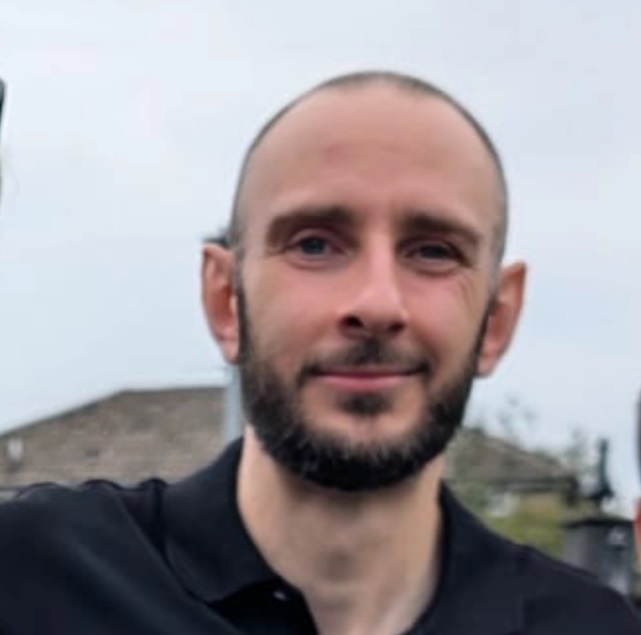
N. D. Thompson is a writer of supernatural suspense and paranormal thrillers, some might say a horror writer. His work has been compared to that of Richard Laymon, Jonathan Janz and James Herbert. He lives in West Yorkshire, England, with his partner, their two children and a three-legged cat.
Want to be under the spotlight?
Fancy answering a few questions to allow your readers to get to know you better? Please do get in touch! 😊 You can see other author interviews here.
 A Quintillion Words | Book Reviewer
One Comment Add yours